
When you’re buying a home, every dollar counts. Between your down payment, closing costs and monthly mortgage, adding another fee can feel like a stretch, which is why many buyers hesitate when they see a property with homeowners association (HOA) dues attached.
But here’s the thing: HOA fees aren’t always just an extra cost. In some cases, they can actually help homeowners save money, reduce maintenance stress and protect their investment over time. The key is understanding what you’re paying for, and whether it aligns with your lifestyle.
In a Nutshell
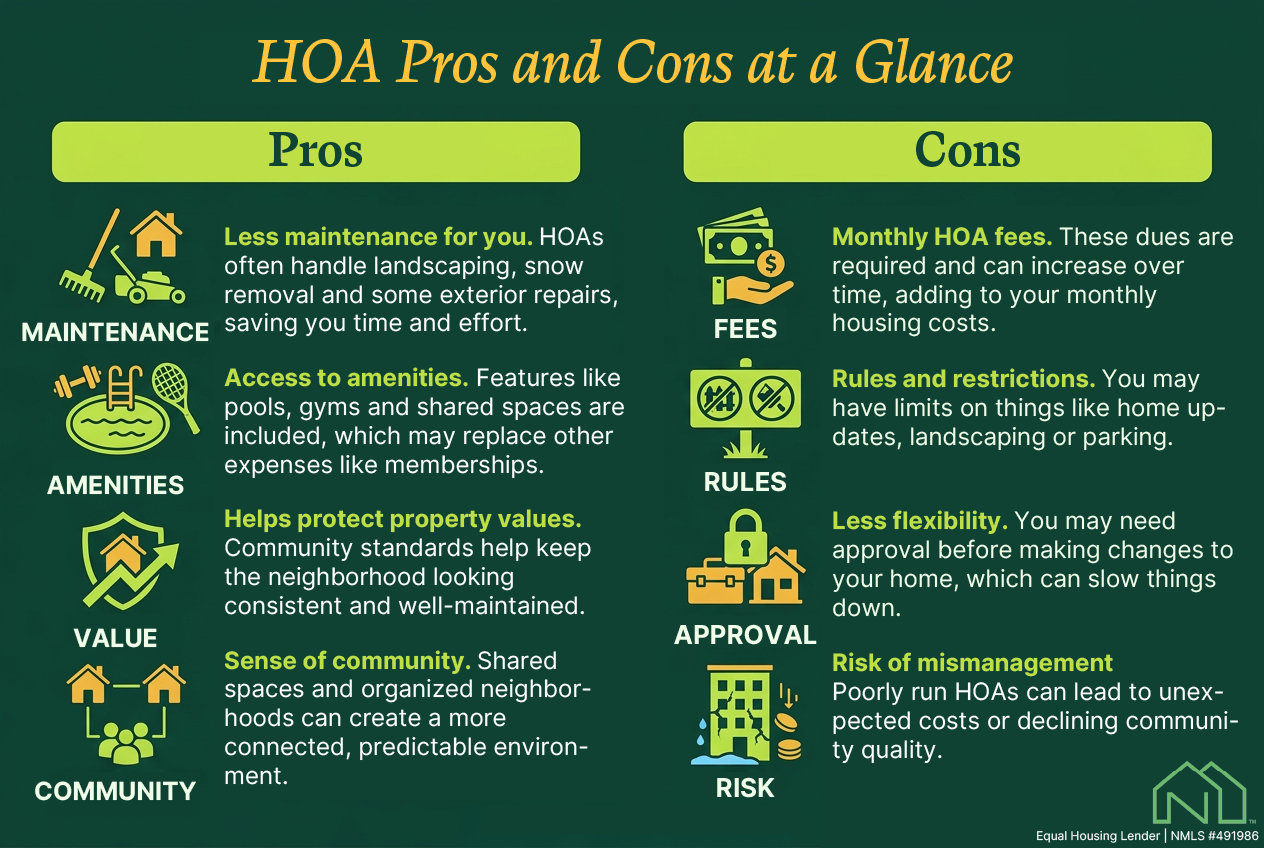
If you’re weighing the HOA pros and cons, it helps to see them side by side. Think of HOAs as a trade-off: more structure and shared benefits in exchange for less flexibility and an added monthly cost.
What is an HOA?
A homeowners association (HOA) is an organization that manages a residential community, such as a neighborhood, condo building or townhouse development. While not all neighborhoods have an HOA, many do. About 33.6% of U.S. housing is part of a community association like an HOA, according to the Foundation for Community Association Research.
HOAs are responsible for maintaining shared spaces – like landscaping, sidewalks or amenities – and enforcing community rules. In exchange, homeowners pay regular dues, often monthly or quarterly.
How HOA Fees Affect Your Monthly Payment
HOA fees play a direct role in how much home you can afford. When you apply for a mortgage, lenders don’t just look at your loan payment. They evaluate your total monthly housing cost, which includes:
Mortgage principal and interest
Property taxes
Homeowners insurance
HOA dues (if applicable)
That means even a modest HOA fee can impact your debt-to-income ratio and borrowing power. For example, a $250 monthly HOA fee is treated the same as an additional $250 in mortgage payment. So while a home with an HOA might have a lower purchase price, the monthly cost could end up being similar, or higher, than a comparable home without one.
How much you can expect to pay in HOA fees can vary. It can range from $50 per month to over $500 per month. But the median cost for HOA fees in the U.S. is $135 per month, according to the most recent U.S. Census Bureau data.
The takeaway: Always evaluate affordability based on the full monthly picture, not just the listing price.
The Pros of Living in an HOA
HOAs come at a cost, but that cost can pay off. Living with an HOA can make life easier and homeownership simpler, in a lot of ways. Here’s how:
Less Maintenance for You
One of the biggest benefits of an HOA is reduced responsibility for upkeep. Depending on the community, your HOA may handle:
Lawn care and landscaping
Snow removal
Exterior maintenance (like roofing or siding in some properties)
This can save you both time and money, especially if you’d otherwise need to hire these services yourself. For busy homeowners or those who don’t enjoy yard work, this convenience is a major win.
Access to Amenities
Many HOA communities include built-in perks that would be expensive to maintain on your own. These can include:
Swimming pools
Fitness centers
Clubhouses
Walking trails or playgrounds
Instead of paying separately for a gym membership or recreational facilities, those costs are bundled into your HOA dues. This means the cost of an HOA may save you money you would be spending otherwise.
Helps Protect Property Values
HOAs are designed to maintain a consistent look and feel throughout the community. Rules around things like home maintenance, landscaping and exterior changes help prevent extreme changes in your neighborhood because it’s dependent on the HOA; not individual homeowners.
This means you are less likely to have things like neglected properties, overly unconventional renovations or other situations in your neighborhood that could drive neighborhood property values down. While it might feel restrictive at times, these standards can help preserve your investment over the long term.
Sense of Community
Living in an HOA can create a more structured, cohesive neighborhood environment. Some communities host events, maintain shared spaces and encourage neighbor interaction. Even without formal activities, consistent standards can make the neighborhood feel more organized and predictable.
For many homeowners, that sense of order and community is a major benefit.
The Cons of Living in an HOA
Not everything is positive about being a part of an HOA. Consider these trade-offs to consider before committing to an HOA.
Monthly HOA Fees
HOA dues are an ongoing expense, and they’re not optional.
Fees can vary widely depending on the community and amenities offered. And importantly, they can increase over time as maintenance costs rise or new projects are planned.
In some cases, homeowners may also face special assessments, which are one-time fees to cover major repairs or unexpected expenses.
Rules and Restrictions
HOAs come with guidelines that homeowners are expected to follow. These rules may cover:
Exterior paint colors or home design
Landscaping choices
Parking regulations
Rental restrictions
Storage of large items on your property such as RVs or trailers
While these rules are meant to maintain consistency, they can feel limiting if you value creative control over your property.
Less Flexibility
Because HOAs enforce rules, you may need approval before making certain changes to your home. For example, you might need permission to:
Install a fence
Add a deck
Change your home’s exterior
This added layer of oversight can slow down projects and limit spontaneity.
Risk of Mismanagement
Not all HOAs are run equally well. In poorly managed communities, issues can include:
Unexpected fee increases
Deferred maintenance
Financial mismanagement
These problems can lead to higher costs or a decline in community quality. That’s why it’s important to review an HOA’s financial health, rules and meeting notes before buying.
Who an HOA Is Great For
HOAs aren’t for everyone, but they can be a great fit for certain buyers. You might benefit from living in an HOA if you are:
A first-time buyer who wants a more structured, low-maintenance experience
A busy homeowner who doesn’t have time for yard work or exterior upkeep
Someone who values amenities like pools, gyms or shared spaces
Looking for consistency in your neighborhood’s appearance and standards
On the other hand, if you prioritize independence and flexibility, an HOA might feel restrictive.
Final Thoughts: Is an HOA Worth It?
So, are HOA fees worth it? The answer depends on what you value most as a homeowner.
If you’re looking for convenience, shared amenities and a well-maintained neighborhood, an HOA can offer real benefits and potentially save you time and effort. But if you prefer full control over your property and want to avoid ongoing fees, the trade-offs may not be worth it.
Ultimately, the right choice comes down to your priorities, budget and lifestyle. By understanding both sides of the equation, you can make a confident, informed decision about whether an HOA fits into your homeownership plans.


Emily Kittle is an experienced underwriter with a strong background in risk assessment, training, and loan decision-making. She excels at solving complex mortgage challenges and guiding loans to closing using creativity and critical thinking.