Buying a home comes with a lot of paperwork, but few documents are as important as the Loan Estimate.
A Loan Estimate is a standardized mortgage document that outlines the key details of a home loan, including the loan amount, interest rate, estimated monthly payment, closing costs, and other expenses associated with borrowing.
Think of a loan estimate as a roadmap for your mortgage. The form is designed to help you understand the financial side of your loan and compare offers from different lenders with confidence. While mortgage terminology can sometimes feel overwhelming, the loan estimate is actually meant to make the process easier. In fact, it's one of the most valuable tools available for evaluating loan options, understanding true borrowing costs, and finding a mortgage payment that fits comfortably within your budget.
In a Nutshell
A Loan Estimate is a standardized three-page document that outlines estimated loan terms, monthly payments, closing costs, and other important mortgage details.
Lenders must provide a Loan Estimate within three business days of receiving a complete mortgage application.
Comparing multiple Loan Estimates can help borrowers identify the most affordable loan option and potentially save hundreds or even thousands of dollars over time.
When Do You Get a Loan Estimate?
After you apply for a mortgage, your lender will review the information you provide and prepare a Loan Estimate. Under federal regulations, lenders must provide borrowers with a Loan Estimate within three business days of receiving a complete mortgage application. This requirement helps ensure borrowers have time to review their options before moving further into the loan process.
Receiving a Loan Estimate does not mean your loan has been fully approved. Instead, the document reflects the lender's current estimate based on the information available at the time. Loan terms, costs, and details may change if new information comes to light during underwriting or appraisal.
Think of the Loan Estimate as an early look at what your mortgage could cost, but it’s not a final approval or commitment.
Why Your Loan Estimate Matters
The homebuying process often moves quickly, especially in competitive housing markets. A Loan Estimate gives you an opportunity to slow down, review the details, and make informed decisions before signing on the dotted line. Rather than focusing only on an advertised interest rate, the document helps you understand the complete picture of what you'll pay both upfront and over time.
Even small differences between loan offers can have a meaningful impact on affordability. A slightly lower interest rate, fewer lender fees, or reduced cash-to-close requirements could save you money at closing and throughout the life of the loan.
The Consumer Financial Protection Bureau (CFPB) notes that borrowers who obtain multiple Loan Estimates and compare offers may save between $600 and $1,200 annually. Shopping around isn't a waste of time – it's one of the smartest financial steps a homebuyer can take.
Most importantly, the Loan Estimate puts information in your hands. It gives you the opportunity to ask questions, compare options, and choose a mortgage that supports your long-term financial goals.
How to Read a Loan Estimate
The standard Loan Estimate form is typically three pages long. Each section highlights different aspects of your mortgage, including loan terms, monthly payments, closing costs, and comparison details. At first glance, the form may appear packed with numbers and unfamiliar terminology. But when you break it down section by section, it becomes much easier to understand.
As you review your mortgage loan estimate, focus on one key question: How does this loan fit into my budget today and in the future? Understanding the answers can help you avoid surprises and feel more confident about your mortgage decision.
Page 1: Loan Terms, Monthly Payment and Cash to Close
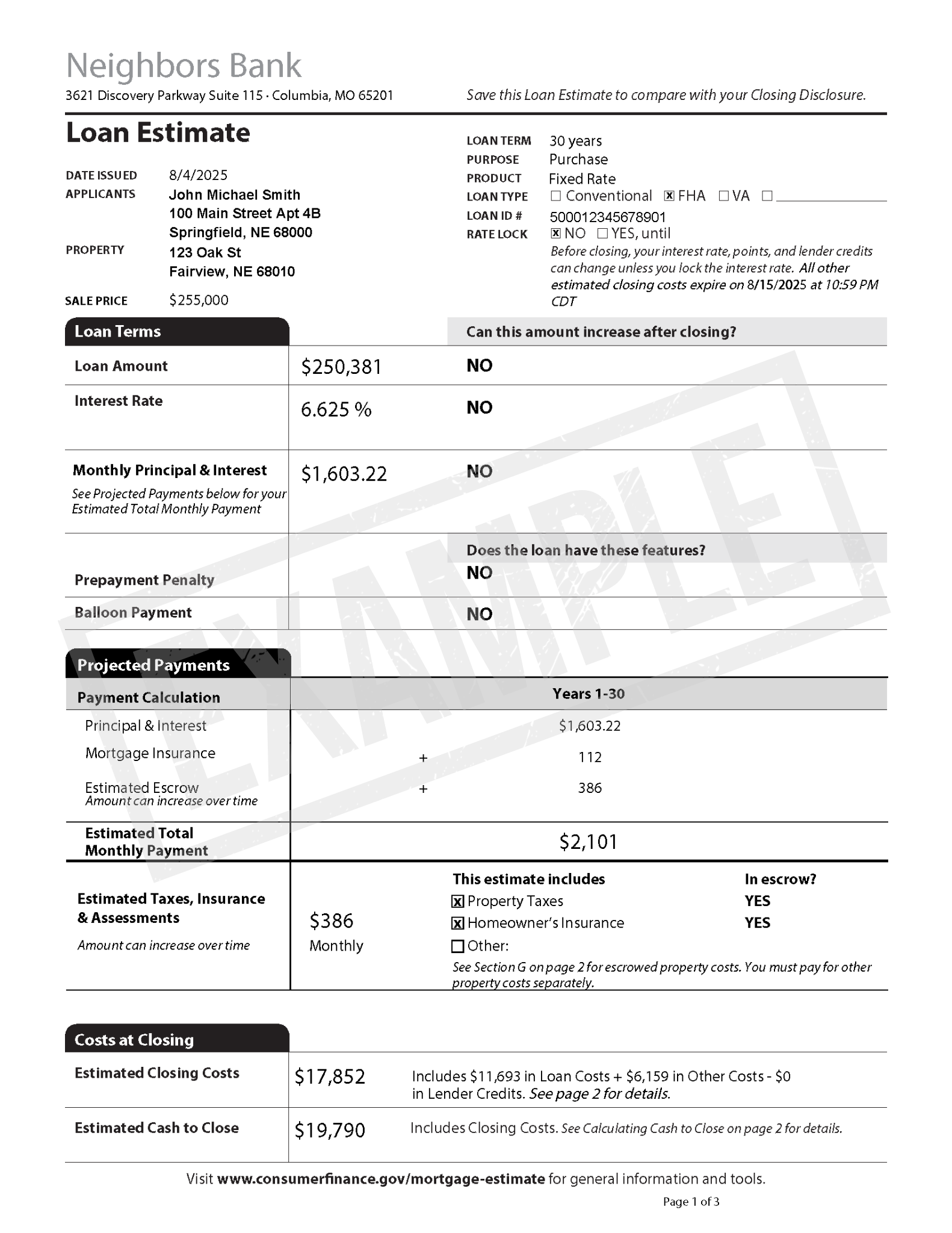
The first page provides a high-level summary of your loan.
Key information typically includes:
Loan amount
Interest rate
Monthly principal and interest payment
Estimated total monthly payment
Estimated cash to close
The loan amount represents how much you're borrowing. The interest rate shows the cost of borrowing that money.
You'll also see your estimated monthly payment. There is a line for the Principal and Interest, another for Mortgage Insurance, and then the Estimated Escrow. Depending on your loan, the Estimated Escrow may also include estimated property taxes, homeowners insurance, and other housing-related costs. Then it lists the Estimated Total Monthly Payment you’ll make.
Pay close attention to the total monthly payment, not just the base principal and interest amount. The payment should feel sustainable within your overall financial picture, not simply fall within the maximum amount a lender is willing to approve.
This page also highlights whether the loan includes features such as:
Prepayment penalties
Balloon payments
Future payment increases
These details can significantly affect the long-term affordability of the loan. Look out for these and make sure you understand how they work if they are included in your Loan Estimate.
Finally, you'll see an estimate of your cash to close. This amount reflects how much money you'll likely need to bring to closing, including your down payment and various closing costs.
Page 2: Closing Costs and Fees
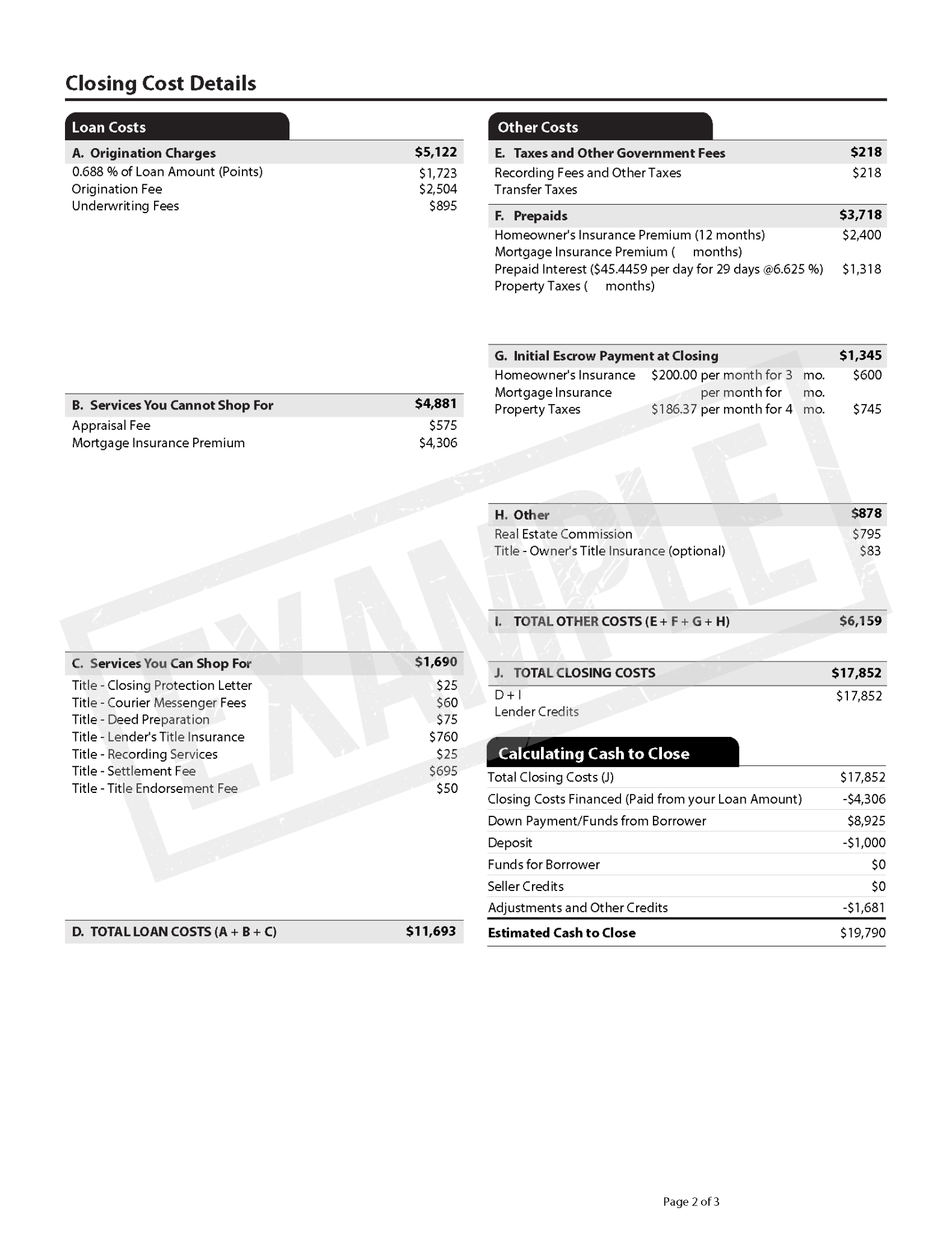
The second page breaks down the costs associated with obtaining the loan. You'll generally see expenses divided into categories that may include:
Origination Charges: These are fees charged directly by the lender for processing and underwriting your loan. Including any points to buy down the interest rate.
Services You Cannot Shop For: These services are selected by the lender and may include items such as credit reports, flood certifications, or appraisal management fees.
Services You Can Shop For: These are third-party services where you may have the opportunity to select your own provider, such as title insurance or certain settlement services.
Taxes and Government Fees: These charges may include recording fees and transfer taxes required by local or state governments.
Prepaid Costs: Prepaid expenses are costs collected before they are due, such as homeowners insurance premiums or prepaid mortgage interest.
Initial Escrow Payment: If your loan includes an escrow account, you'll contribute funds upfront to cover future property taxes and insurance payments.
One helpful way to review this page is to separate lender-related costs from third-party costs. Some fees are controlled by the lender, while others are required services provided by outside companies or government agencies.
The total closing costs and cash-to-close figures deserve special attention because they determine how much money you'll need upfront. Even if a monthly payment looks attractive, the loan still needs to fit your available savings and overall financial plan.
Page 3: Comparison Tools and Other Details
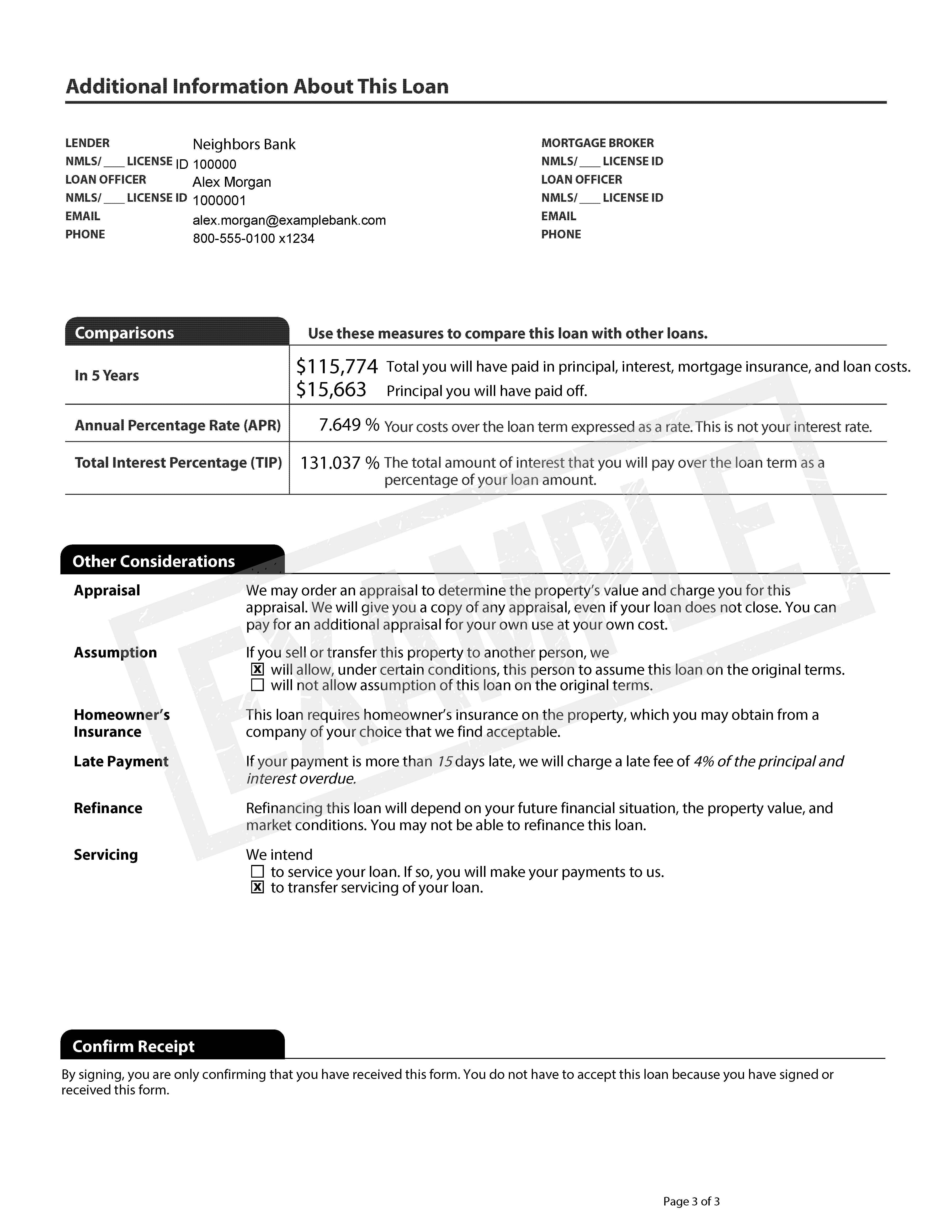
The third page contains comparison tools designed to help borrowers evaluate the total cost of a mortgage. One of the most important figures here is the Annual Percentage Rate (APR).
The interest rate reflects the basic cost of borrowing money. The APR includes the interest rate plus certain loan-related fees and costs, providing a broader view of what the mortgage may cost over time.
Looking at APR versus interest rate just shows you different ways to understand the costs associated with the loan. APR serves as a comparison tool that helps borrowers evaluate similar loan offers.
On page 3, you'll also find information such as:
Total Interest Percentage (TIP): This figure shows how much interest you'll pay over the life of the loan compared to the amount borrowed.
Total Payments: This estimate reflects the total amount you may pay over the life of the mortgage, including principal, interest, mortgage insurance, and certain other costs.
Because these figures capture more of the loan's overall expense, they can be useful when comparing offers that initially appear similar.
How to Use a Loan Estimate to Compare Lenders
One of the biggest advantages of a Loan Estimate is that it allows borrowers to compare lenders using a standardized format. Because every lender uses the same form, it's easier to evaluate offers side by side.
For the most accurate comparison, try to compare Loan Estimates that use:
The same loan type
The same loan amount
The same down payment amount
Similar rate-lock assumptions
Mortgage shopping is normal, encouraged, and often beneficial for borrowers. Taking time to compare offers can help you find the loan that best matches both your financial goals and your monthly budget.
Consider these specific Loan Estimate features as you shop:
Compare the Monthly Payment First
Many borrowers focus on interest rates, but the monthly payment is often a better starting point. Look beyond principal and interest to evaluate the full estimated monthly payment.
This amount may include:
Property taxes
Homeowners insurance
Mortgage insurance
Escrow payments
Two loans with similar interest rates can result in noticeably different monthly housing costs. Keep in mind that the homeowners insurance and property taxes on the Loan Estimate are estimates, so if you’re seeing big discrepancies between offers, ask the lender how they derived them.
As you compare offers, ask yourself:
"Would this payment still feel manageable after paying for groceries, utilities, childcare, transportation, savings goals, and unexpected expenses?"
A mortgage should support your lifestyle – not stretch it beyond your comfort level.
Compare Cash to Close
A lower monthly payment isn't always the best option if the upfront costs are difficult to afford. Review the cash-to-close section carefully and compare:
Down payment requirements
Closing costs
Prepaid expenses
Lender credits
Some lenders may offer credits that reduce your upfront costs, while others may charge higher fees in exchange for a lower rate. If any fee seems confusing or unexpected, ask your lender to explain it. Understanding where your money is going can help you make a more informed decision.
Compare Interest Rate and APR
Interest rates are important, but they don't tell the whole story. The interest rate reflects the cost of borrowing before certain fees and costs are considered. APR provides a broader comparison by including some of those additional expenses.
For example, one lender may advertise a lower interest rate but charge significantly higher fees. Another lender may offer a slightly higher rate with lower upfront costs.
Looking at both the interest rate and APR can help you evaluate the true cost of each loan rather than choosing based on rate alone.
What to Ask Your Lender About Your Loan Estimate
Reviewing a Loan Estimate is an important step, but you don't have to navigate it alone. A good lender should welcome your questions and help you understand every cost and term included in the document.
Consider asking:
Which fees are charged by the lender and which come from third parties?
Are any of these costs likely to change before closing?
Does this loan include mortgage insurance?
Is the interest rate locked or floating?
What would increase or decrease my cash-to-close amount?
Are there lender credits available?
How does this loan compare to other options I may qualify for?
Are there any prepayment penalties or unusual loan features I should know about?
Remember: asking questions isn't annoying – it's responsible. A mortgage is one of the largest financial commitments most people will ever make, and understanding your Loan Estimate can help ensure you're choosing a loan that feels affordable, manageable, and aligned with your long-term goals.


Emily Kittle is an experienced underwriter with a strong background in risk assessment, training, and loan decision-making. She excels at solving complex mortgage challenges and guiding loans to closing using creativity and critical thinking.