Buying a home comes with questions that can be easier to answer when someone in your family has been through the process before. A parent may know what to expect at closing, which costs to ask about, or when to call a lender for more information. First-generation homebuyers may need to build that support network elsewhere.
Neighbors Bank surveyed 1,000 American homeowners to understand where those differences show up in the homebuying process. The results point to a practical takeaway: first-generation homebuyers may have less family experience to draw on, but clear information about costs, loan options, and where to turn for help can provide them with a stronger roadmap for making their own decisions.
For buyers without family homebuying experience to draw on, a trusted lender can be an important source of guidance, explaining unfamiliar terms, setting expectations for costs and documentation, and answering questions throughout the process.
Key Takeaways
About 1 in 12 homeowners surveyed (8%) were first-generation homebuyers, meaning their parents or guardians had never owned a home.
First-generation homebuyers put down a median of $15,000 for their down payment, compared to $24,000 for non-first-generation buyers.
57% of non-first-gen and 47% of first-gen homebuyers didn't know that closing costs were negotiable before they started.
First-generation buyers were more than twice as likely to seek homebuying help from lenders or loan officers as from their parents (34% vs. 16%).
15% of first-gen homebuyers turned to AI for assistance, compared to 7% of non-first-gen homebuyers.
12% of first-gen homebuyers received a financial gift from family to help with their purchase, compared to 22% of non-first-gen homebuyers.
How First-Generation Homebuyers Navigate Costs and Closing
A down payment is only one part of the upfront cost of buying a home. Closing costs, fees, and lender requirements can also affect the amount a homebuyer needs before closing. Respondents' experiences highlight areas where clearer information early in the process can help buyers prepare.
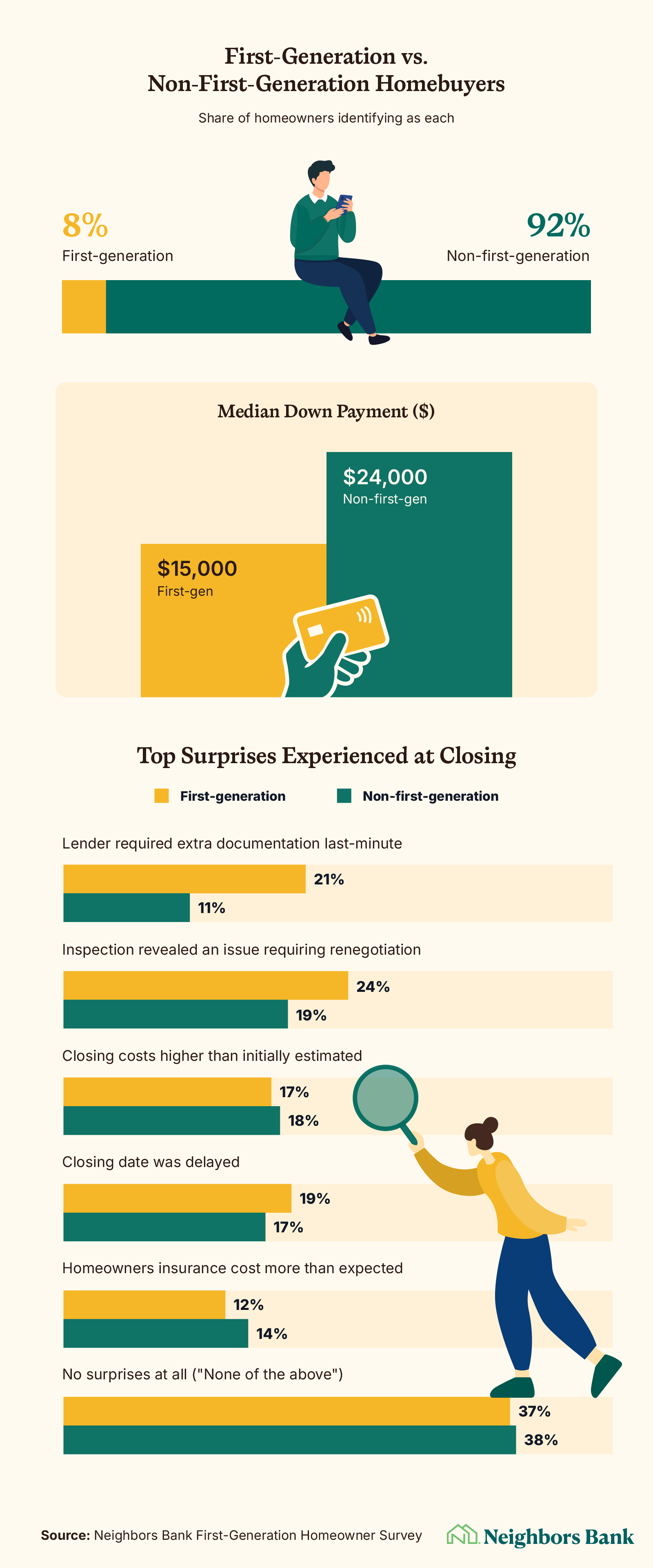
Among the homeowners surveyed, 8% were first-generation homebuyers, meaning their parents or guardians had never owned a home. These respondents reported a median down payment of $15,000. Among non-first-generation respondents, the median was $24,000.
Some homebuyers also encountered unexpected paperwork as they reached closing. Lender requests for extra documentation at closing surprised 21% of first-gen respondents and 11% of non-first-gen respondents.
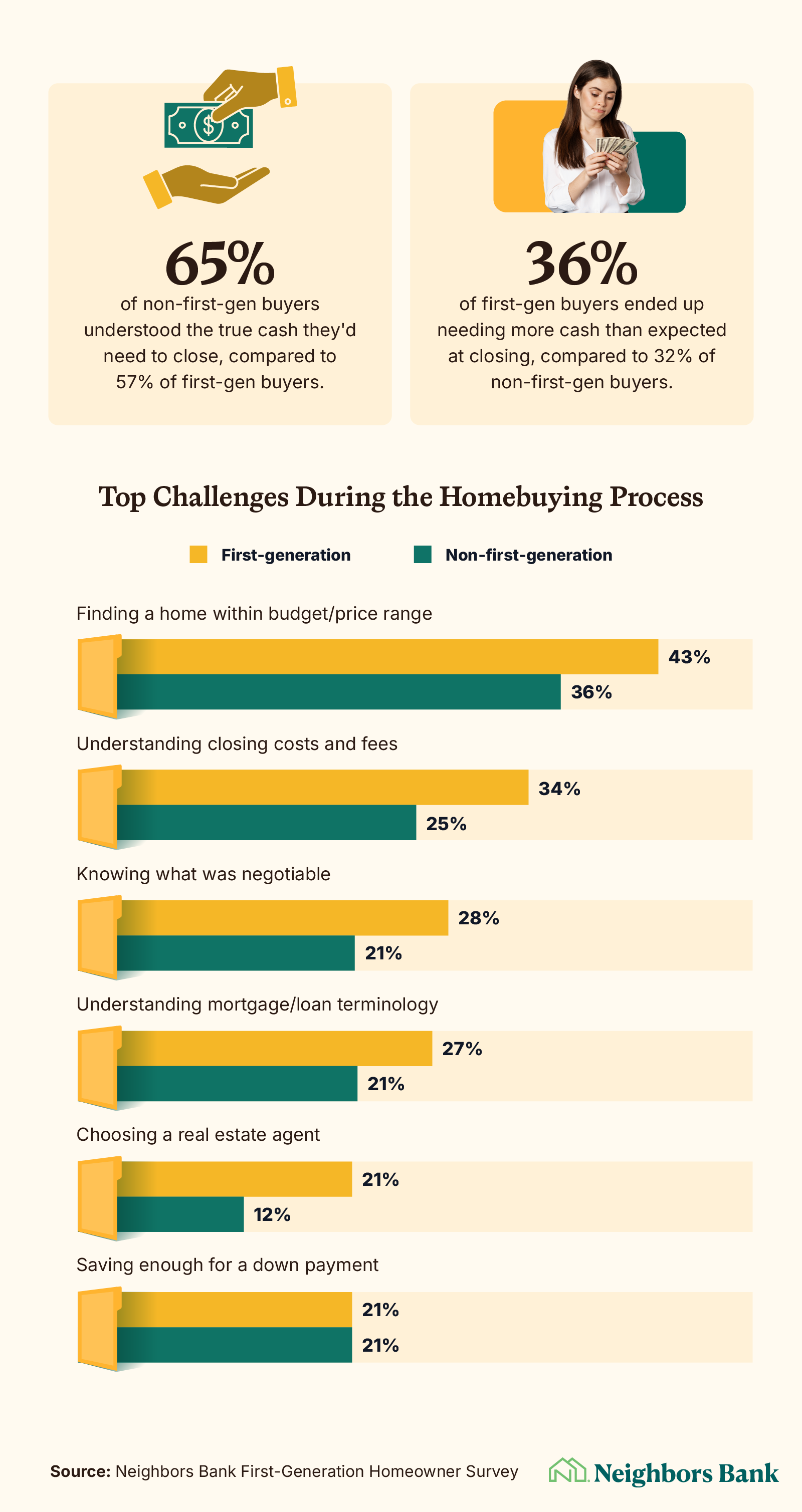
Having enough money ready for closing was a challenge for respondents in both groups. More than a third of first-gen respondents (36%) needed more cash than expected at closing, as did 32% of non-first-gen respondents. Understanding closing costs and fees was also a top challenge for 34% and 25% of homebuyers in these groups, respectively.
Knowing the full estimated cash needed to close can give homebuyers a clearer picture than focusing on the down payment alone. A lender can:
Walk through the loan estimate
Explain which costs may change
Answer questions about how upfront expenses and monthly payments fit together
Getting that information early gives homebuyers more context to compare their options and decide what fits their circumstances.
Building a Homebuying Support Network
Family experience can be one source of homebuying guidance, but it's not the only one. Respondents sought help from parents, lending professionals, and tools such as AI. Most first-generation respondents felt prepared going into the process, and many were already aware of assistance programs.
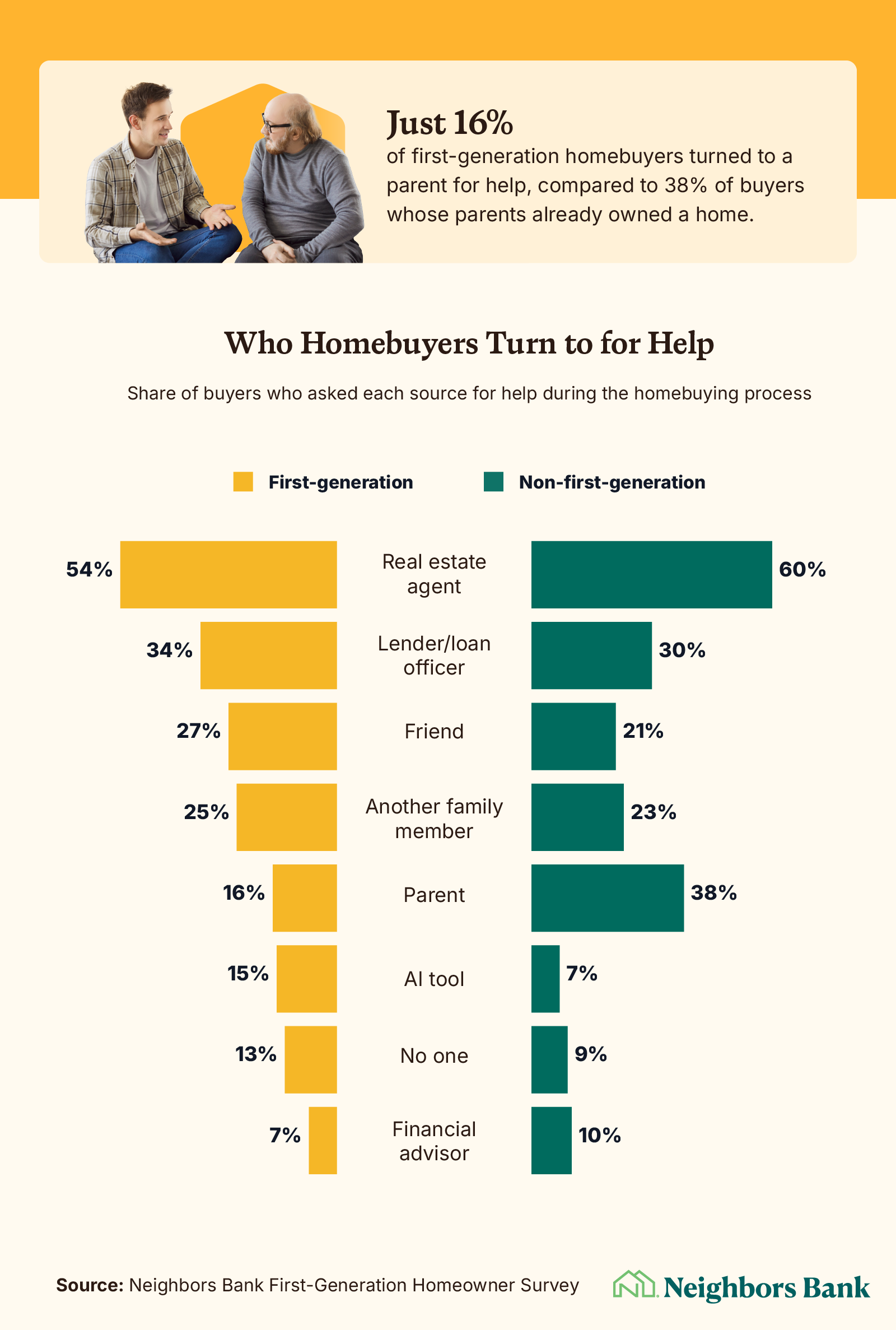
Among first-gen respondents, 16% asked a parent for help during the homebuying process, and 34% sought guidance from a lender or loan officer. Among non-first-gen respondents, 38% turned to a parent for help.
AI was another source of assistance for some homebuyers: 15% of first-gen respondents used it for help, as did 7% of non-first-gen respondents.
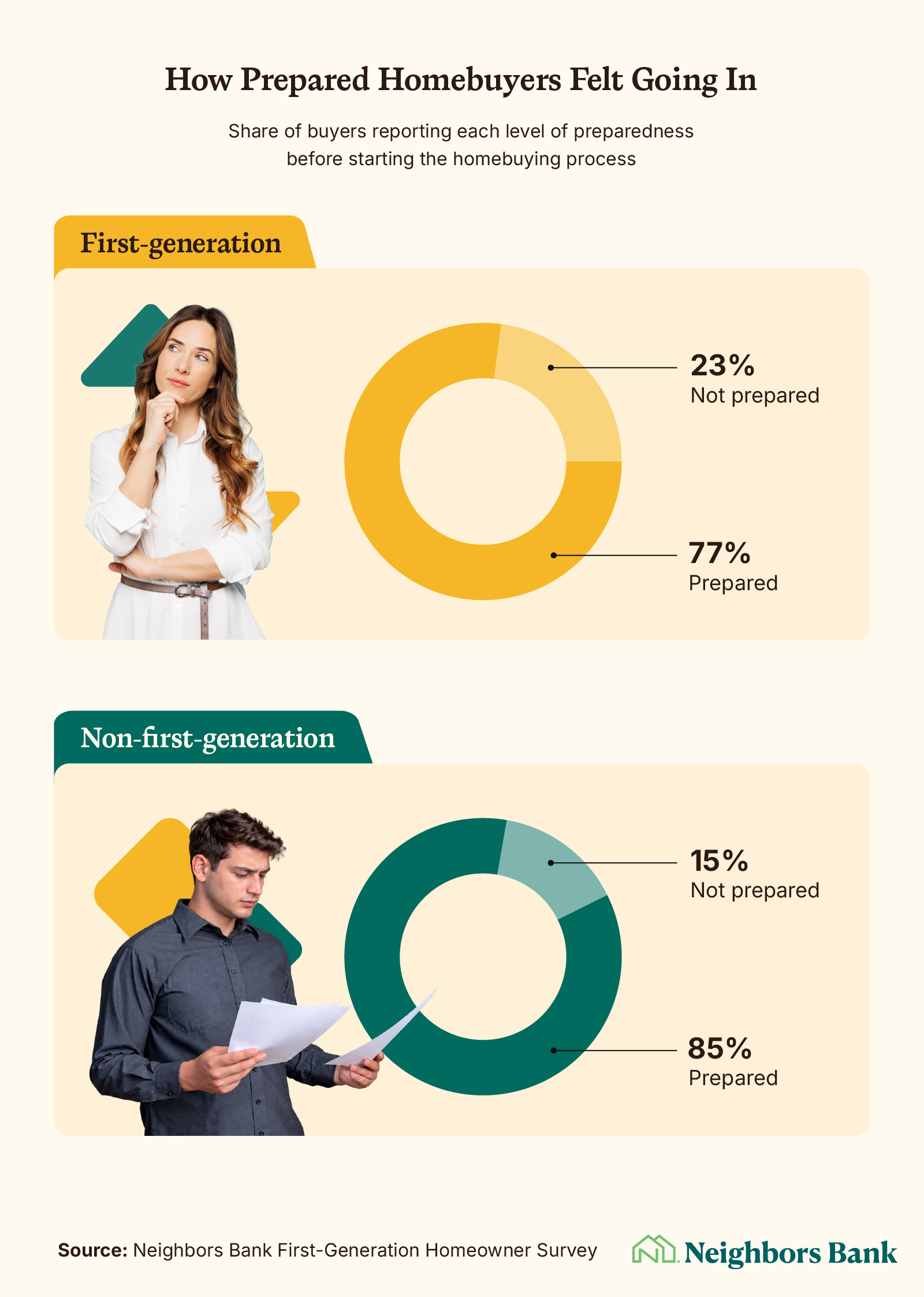
Most respondents felt prepared going into the process, including 77% of first-generation buyers and 85% of non-first-generation buyers. Many also knew about down payment assistance or first-time homebuyer programs: 70% of first-gen and 67% of non-first-gen respondents reported being aware of these resources.
Knowledge about closing costs varied within both groups. Among first-gen respondents, 53% knew before they started that closing costs could be negotiated; 43% of non-first-gen respondents reported the same awareness. Asking a lender which costs are negotiable can help buyers understand their options before closing.
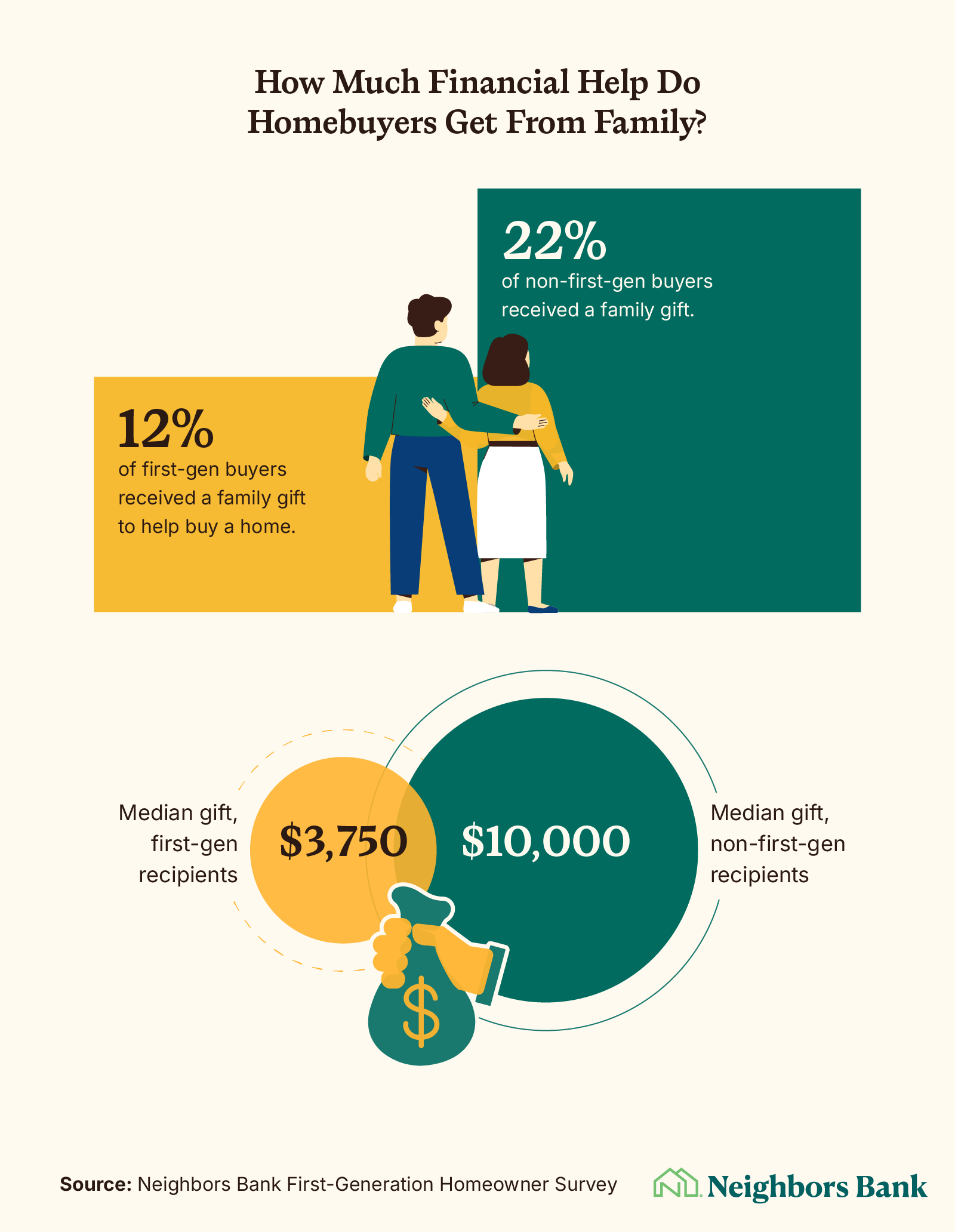
Some respondents received financial support from family toward their home purchase. This included 12% of first-gen respondents and 22% of non-first-gen respondents. Among those who received family help, the median gift was $3,750 for first-generation buyers and $10,000 for non-first-generation buyers.
The broader takeaway is not that first-gen homebuyers are unprepared, but that they may build their homebuying knowledge and support in different ways. Clear explanations from lenders and other trusted sources can help fill in information gaps around costs, assistance programs, loan options, and the steps between an offer and closing.
A Clearer Path From Offer to Closing
First-generation homebuyers may not inherit a family roadmap, but they can build one. Most first-gen homeowners in the survey felt prepared going into the process, and most knew about assistance programs, even as differences remained in where they found guidance and what they knew about closing costs.
For homebuyers who want more information before making a decision, a knowledgeable lender can explain a loan estimate, expected cash to close, and how options such as low or zero down payment loans and down payment assistance differ based on eligibility.
These same steps can help non-first-generation homebuyers, too, since family experience doesn't always cover every cost, loan option, or decision that can come up during the process. With clearer information, homebuyers can compare their options and decide what works best for their situation.
Methodology
Neighbors Bank surveyed 1,000 American homeowners from September 9–16, 2026, to explore how first-generation status shapes the homebuying experience. First-generation homebuyers were defined as respondents whose parent or guardian had never owned a home; this group made up 8% of the sample (n=83), compared with 92% (n=917) whose parent or guardian had owned a home.
Respondents ranged in age from 19 to 83 and were 55% women, 44% men, 1% non-binary, and <1% who preferred not to answer. Percentages may not sum to 100% due to rounding or to questions that allowed multiple responses. The margin of error is ±3.1% for the full sample at the 95% confidence level, ±3.2% for non-first-generation buyers, and ±10.8% for first-generation homebuyers, given the smaller subgroup size.
About Neighbors Bank
Neighbors Bank operates as an online-first lender, serving borrowers in 49 states who offers a range of home loan options for first-time and underserved homebuyers. It combines digital mortgage tools with personalized guidance, with a focus on making homeownership more affordable, achievable, and accessible.
Fair Use Statement
The data and findings in this study are available for noncommercial use only. When referencing or republishing this research, please attribute the work to Neighbors Bank and link to the original article.