A good neighborhood is easy to feel and hard to put a number on. As a lender focused on making homeownership more affordable and accessible, Neighbors Bank wanted to know what actually makes a place feel good to live in, and whether those qualities are reserved for the priciest zip codes or within reach for first-time and everyday homebuyers. To find out, we surveyed more than 1,000 US adults about the neighbors and neighborhoods they want, then ranked the 100 largest US metros on the qualities they named.
The answers point somewhere encouraging. The traits people value most — a safe street, a well-kept block, and neighbors who are friendly without crowding you — show up again and again in affordable mid-size metros, not only the priciest ones.
Key Takeaways
Americans most often say a good neighbor respects boundaries (56%) and is quiet and considerate (47%), with 64% wanting neighbors who are friendly but not close friends.
Madison, WI, Allentown, PA, and Harrisburg, PA, are America's top metros for good neighbors in 2026, according to our ranking criteria.
Good neighbors carry real value, with more than half of Americans (56%) willing to pay a premium for a more connected community.
More than 1 in 5 Americans (23%) would pay a 5% to 10% premium for a home with great neighbors.
66% of Americans could name at least one neighbor to call in an emergency, but 34% couldn't.
What Americans Want Most From the People Next Door
When Americans describe a good neighbor, they picture someone friendly enough to wave hello and respectful enough to give them space.
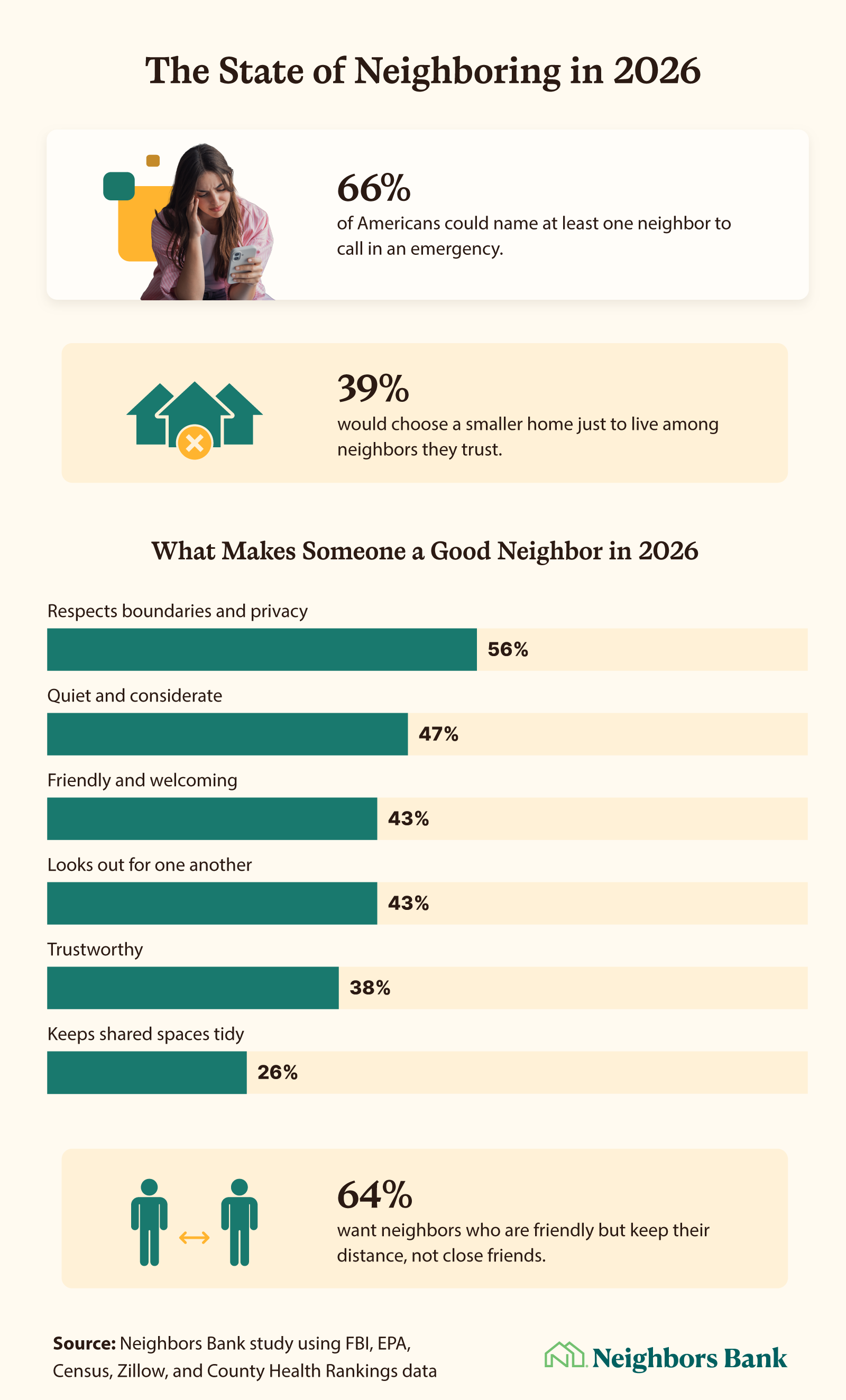
Most people want a warm but easygoing relationship with the folks next door. About 2 in 3 Americans (64%) said they want a friendly but boundaried relationship with their neighbors rather than a close friendship, a sign that the ideal neighbor is approachable without being underfoot.
There's still plenty of room to build those ties. More than 1 in 3 Americans (34%) said they couldn't yet name a neighbor they'd call in an emergency, and 13% couldn't name a single neighbor. That gap is really an opportunity, since making a few local connections is one of the best ways to make a place feel like home.
Younger Americans have the most room to grow these relationships. More than 2 in 5 Gen Z (43%) said they couldn't name an emergency neighbor, compared with 1 in 5 baby boomers (20%). Homeowners were more likely than renters to trust their neighbors a lot (38% vs. 25%), and renters were less likely to have no "emergency neighbor" (44% vs. 24%). Neighborly ties appear to deepen as people put down roots and settle into a place.
Madison, WI Tops America's Best Metros for Good Neighbors
Some metros simply check more of the good-neighbor boxes, and a handful of mid-size cities lead the pack.
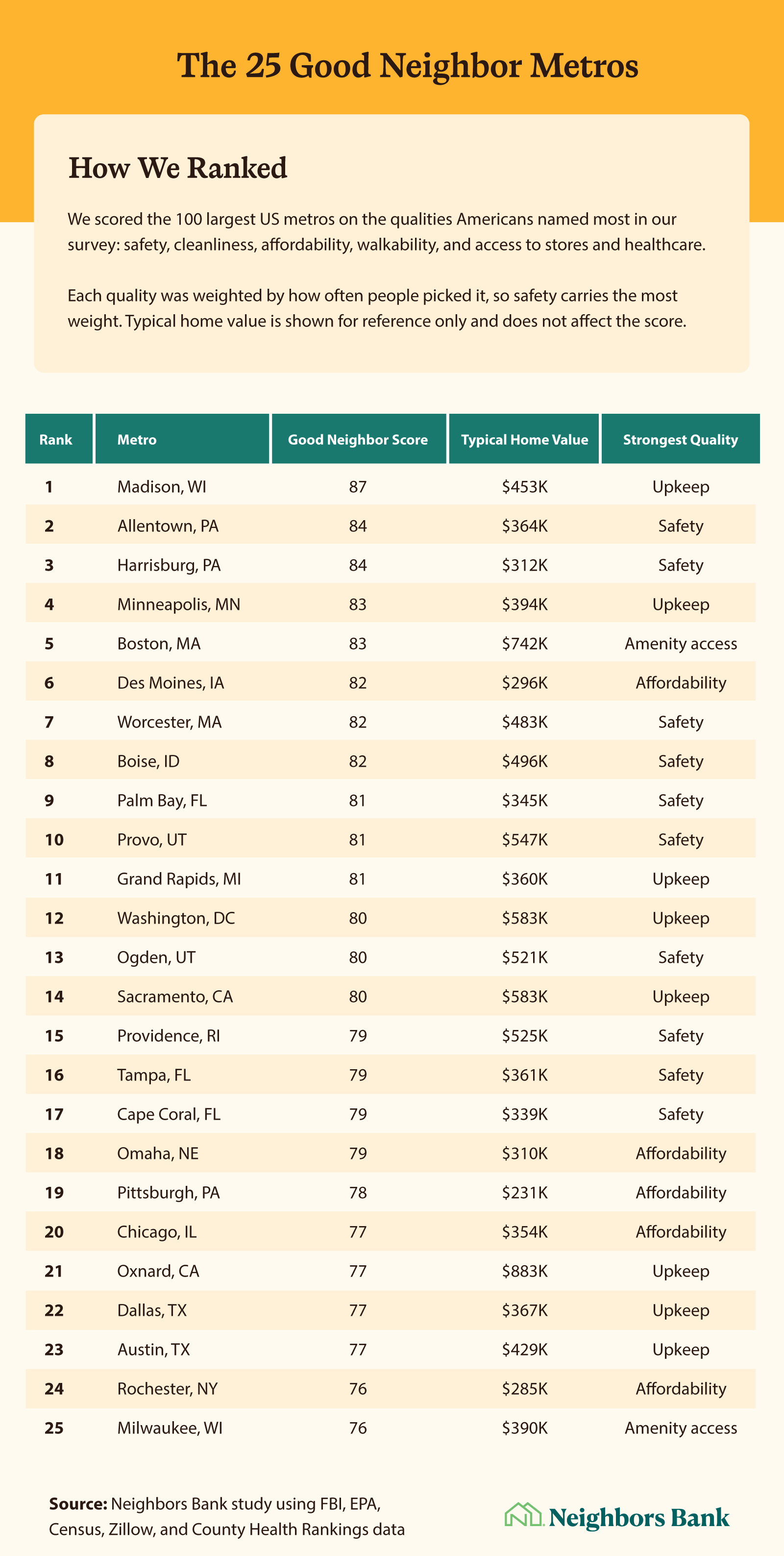
Madison, WI, ranked as America's top metro for good neighbors, leading on cleanliness and upkeep, while also scoring high on safety and access to everyday amenities. Allentown, PA, Harrisburg, PA, Minneapolis, and Boston rounded out the top 5, each scoring well on the qualities people said they value most.
Affordable mid-size metros, not big-ticket coastal cities, filled much of the top of the ranking. Harrisburg, Des Moines, Omaha, and Rochester all show that a strong neighborhood doesn't have to carry a big-city price tag, which is welcome news for first-time and budget-minded homebuyers deciding where to put down roots.
The Cities That Lead on Safety, Upkeep, and Value
Zoom in on individual qualities, and different cities rise to the top.
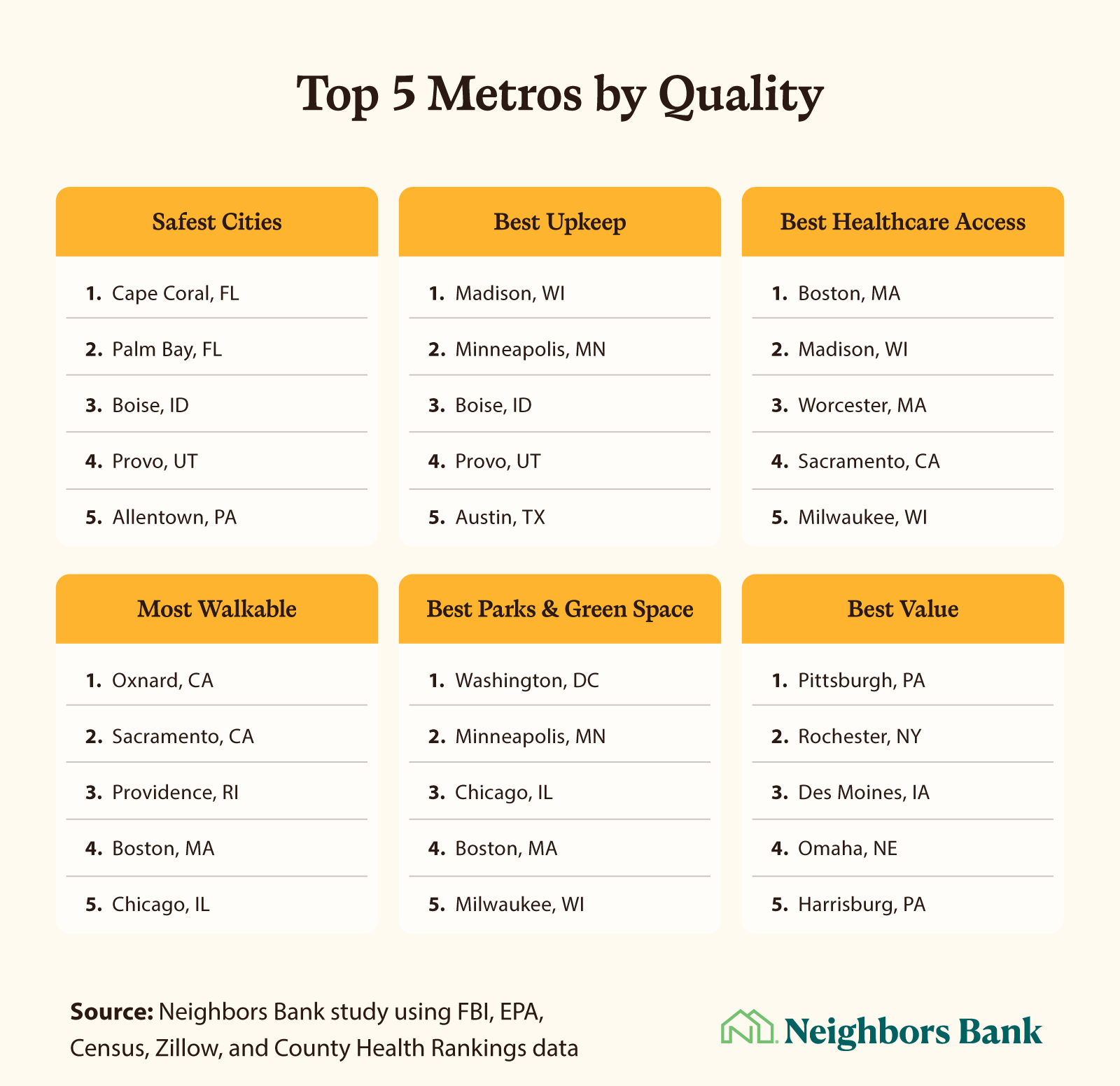
For safety, Sun Belt and Mountain West cities stood out. Cape Coral and Palm Bay, FL, along with Boise, ID, had the lowest crime rates among the principal cities in the ranking.
Other cities led on the qualities that round out daily life. Madison topped the list for cleanliness and upkeep, Boston for healthcare access, Oxnard, CA, for walkability, and Washington, DC, for parks and green space.
Pittsburgh offered the best value of any ranked metro, pairing strong good-neighbor quality with a typical home value near $231,000. It's proof that a well-rounded neighborhood can still be affordable.
What Americans Would Pay for a Home With Great Neighbors
Many Americans believe having great neighbors is something worth paying for.
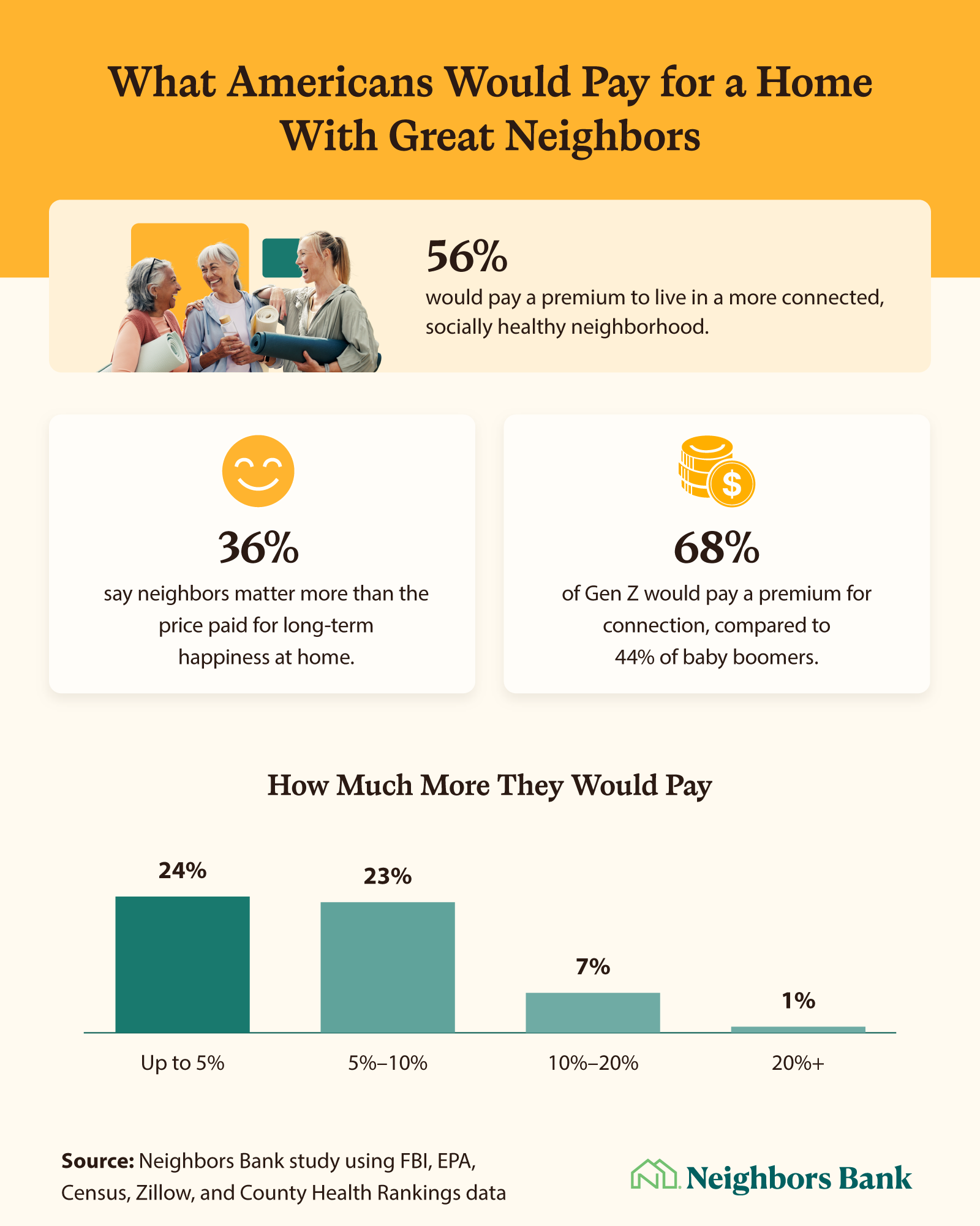
More than half of Americans (56%) said they'd pay a premium to live in a more connected, socially healthy neighborhood. For many, that willingness comes with a concrete number. More than 1 in 5 Americans (23%) would pay a 5% to 10% premium for a home with great neighbors.
Younger homebuyers were the most willing to open their wallets for connection. More than 2 in 3 Gen Zers (68%) said they'd pay a premium, compared with fewer than half of baby boomers (44%). And when asked what matters most for long-term happiness in a home, more than 1 in 3 Americans (36%) named the neighborhood and the neighbors, well ahead of the 13% who pointed to the price they paid.
Community can even outweigh the house itself. Nearly 1 in 5 Americans (19%) said they'd leave a home they love for a stronger sense of community, a figure that rose to about 1 in 4 millennials (24%).
Americans say they'd pay for good neighbors, and the market suggests those qualities hold real value, walkability, amenities and upkeep all line up with higher home values. The most striking result is safety: the safest metros carry typical home values around $366,000, essentially the same as the least safe at $377,000, so the quality Americans want most comes with no price premium at all. And because the index rewards affordability, the top-ranked metros stay attainable, Madison ($453K), Allentown ($364K) and Harrisburg ($312K) all deliver good-neighbor quality well below the country's priciest markets.
What Makes a Neighborhood Feel Good to Live In
Beyond the people next door, Americans largely agree on the fundamentals a good neighborhood needs.
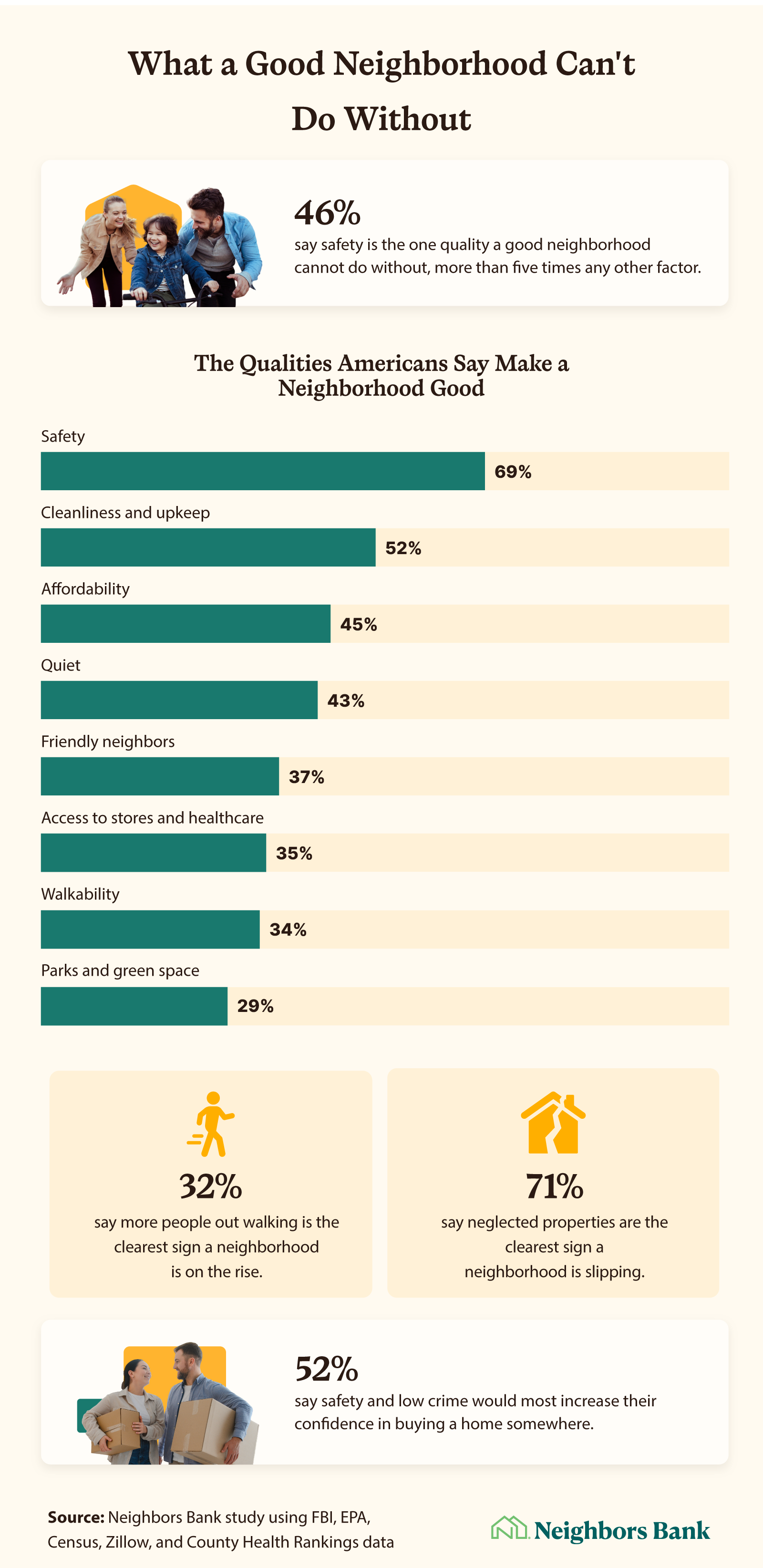
When asked to name the one quality a neighborhood can't do without, nearly half of Americans (46%) chose safety, more than any other factor. Affordability came next, though at a distance, chosen by fewer than 1 in 10 (8%).
When people named all the qualities they value, rather than a single must-have, a well-kept neighborhood rose near the top. Cleanliness and upkeep was the second most valued quality overall (52%), ahead of every neighbor-related trait. Friendly neighbors still registered as core, named by more than 1 in 3 Americans (37%), along with the 1 in 4 (25%) who valued people who look out for one another.
Some of the most communal-sounding features mattered less than expected. Small businesses (6%), local events (5%), and community pride (5%) each landed near the bottom of the must-have list, a reminder that for most people, a good neighborhood starts with the basics: feeling safe and taking pride in a well-kept street.
Good Neighbors Are Closer and More Affordable Than You Think
The data lands on a hopeful note for anyone worried that a great neighborhood is out of reach. The qualities Americans value most, a safe street, a well-kept block, and neighbors who are friendly without crowding you, show up in affordable mid-size metros.
If you're deciding where to buy, it's worth looking past the price tag alone and asking how a place actually feels to live in, because the neighborhood you choose may matter more to your long-term happiness than the home itself. And building a few neighborly ties, the kind most people say they want, costs nothing at all.
About Neighbors Bank
Neighbors Bank works to make homeownership more affordable, accessible, and achievable for homebuyers. We offer a full range of home loan options, including FHA, USDA, VA, and conventional loans, along with down payment assistance programs that can cover up to 100% of a buyer's down payment and closing costs. We also rank among the top 3 USDA lenders in the country.
For first-time and moderate-income homebuyers, we pair modern digital mortgage tools with one-to-one support, from credit-building help before preapproval to a dedicated team that keeps you in the loop through closing. Whether you're figuring out what you can afford or ready to apply, our experts are here to help you find the right path to a home of your own.
Fair Use Statement
Feel free to share the findings and visuals from this study for noncommercial purposes. When you do, please include a link back to Neighbors Bank so readers can explore the full report and its methodology.