Downsizing from a larger home to a smaller one can appeal to people at very different stages of homeownership. For older homeowners, the appeal may be less upkeep and a simpler lifestyle. For first-time homebuyers, downsizing may feel like a more affordable path to homeownership.
To better understand why people are considering downsizing, Neighbors Bank surveyed 1,000 U.S. adults, including homeowners age 55 and older and first-time homebuyers. As a lender focused on making homeownership more accessible, the bank explored what draws people to consider downsizing and what gives them pause. Understanding the trade-offs, along with financing options that may improve affordability, can give homebuyers a fuller picture before they decide to choose a smaller home than their current one.
Key Takeaways
76% of homeowners age 55 and older are considering downsizing or have already done so in the past two years.
56% of first-time homebuyers are considering downsizing from their current living space.
49% of homeowners would rather stay in their current home and renovate than move to a smaller one.
46% of homeowners age 55 and older who are considering downsizing are unsure whether it's worth the trade-off of giving up their current mortgage rate.
Affordability Influences First-Time Homebuyers' Choices
Many first-time homebuyers are considering whether to buy a smaller home than the one they currently live in. They also shared why they think downsizing could be the better option for them.
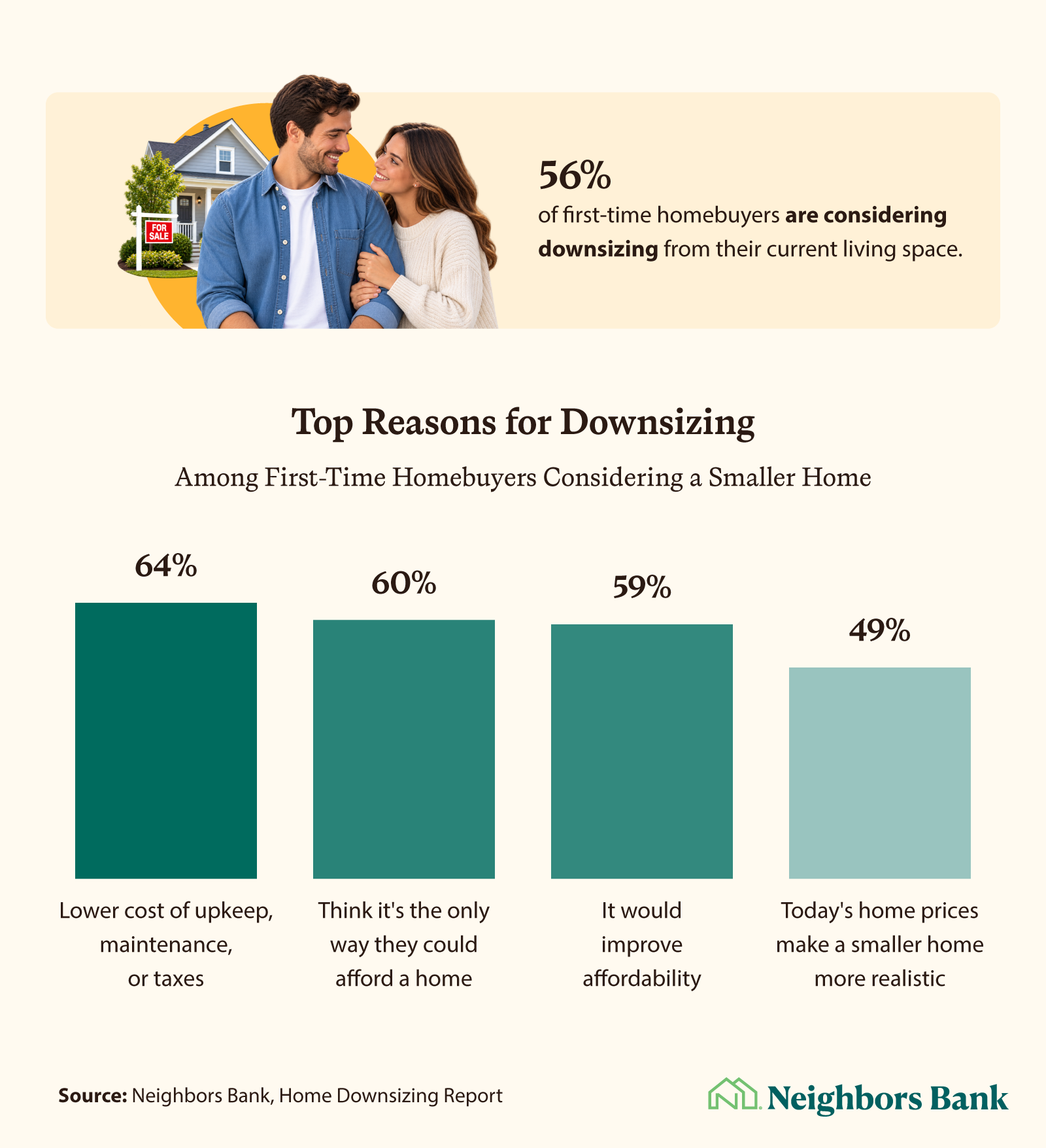
Among first-time homebuyers thinking about downsizing from their current living space, 64% said it's because of the lower upkeep, maintenance, or taxes that a smaller home offers. Other reasons included it being the only way they could afford a home (60%) and improved affordability generally (59%). Just under half (49%) said home prices at the time of the survey made a smaller home more realistic than the one they originally pictured.
Financing is another part of that comparison. Depending on eligibility, Home Possible®, HomeReady®, and HomeOne® loans offer as low as 3% down, while FHA loans offer as low as 3.5% down payment. USDA loans allow a 0%down payment for qualifying homebuyers purchasing in eligible rural and suburban areas. Down payment assistance programs may also help reduce upfront costs.
Understanding those options can help homebuyers separate the amount needed at closing from the monthly payment they can comfortably manage. The best fit also depends on each program's costs and requirements, as well as the space a household needs.
Smaller Homes Appeal to Buyers Seeking Savings and Simpler Living
Smaller homes offer older homeowners a way to reduce both housing costs and day-to-day upkeep. For many, downsizing is also about finding a home that better fits how they want to live now.
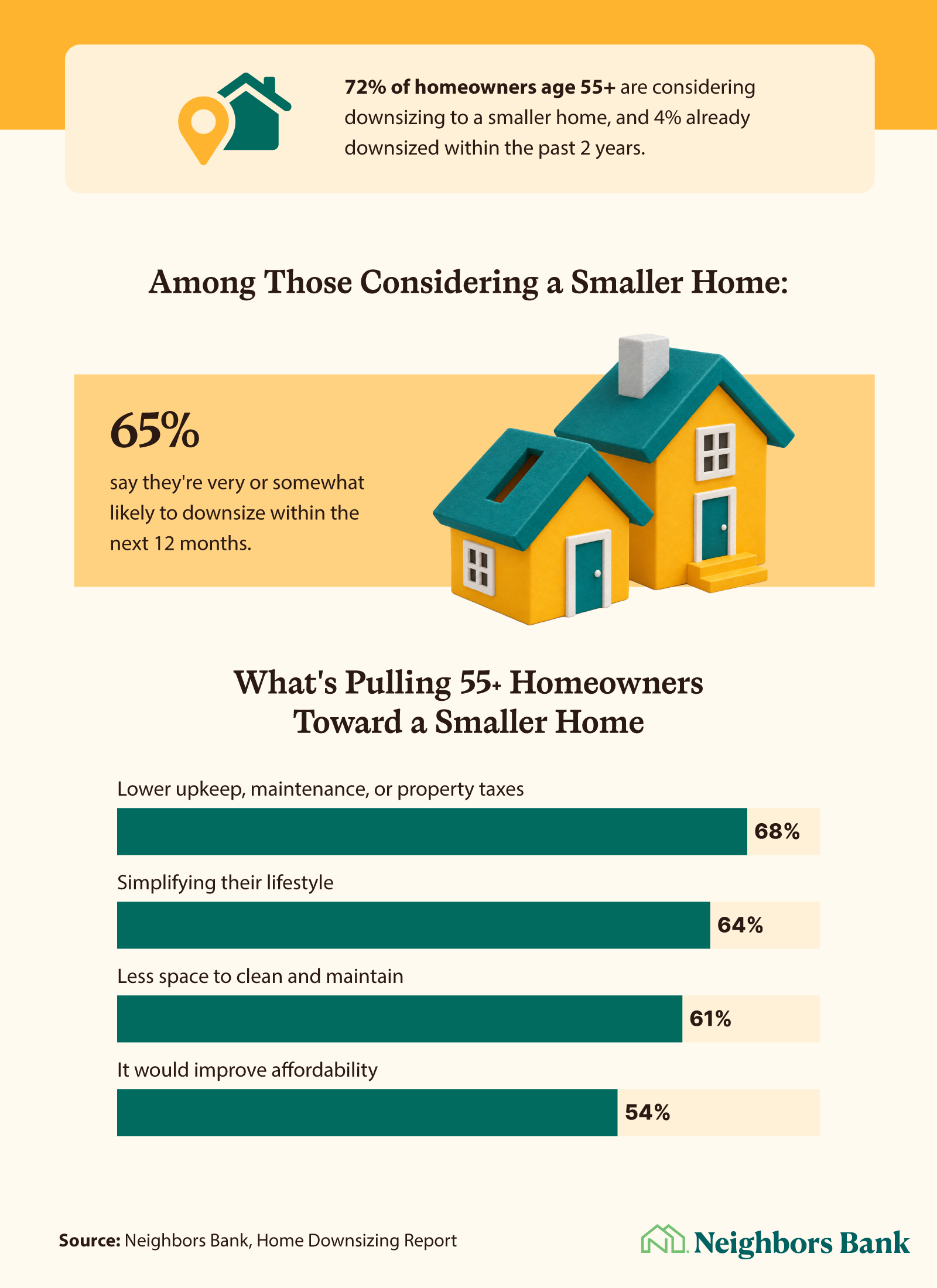
Among homeowners age 55 and older, 76% are considering a smaller, less expensive home or have already downsized in the past two years. The leading reasons were lower upkeep, maintenance, or property taxes (68%), a simpler lifestyle (64%), and less space to clean and maintain (61%). Just over half (54%) cited improved affordability.
Among older homeowners considering downsizing, 65% said they were very or somewhat likely to do so within the next 12 months.
Many Homeowners Prefer Renovating to Relocating
Moving to a smaller home wasn't the only option homeowners considered. Many preferred to adapt the home they already had.
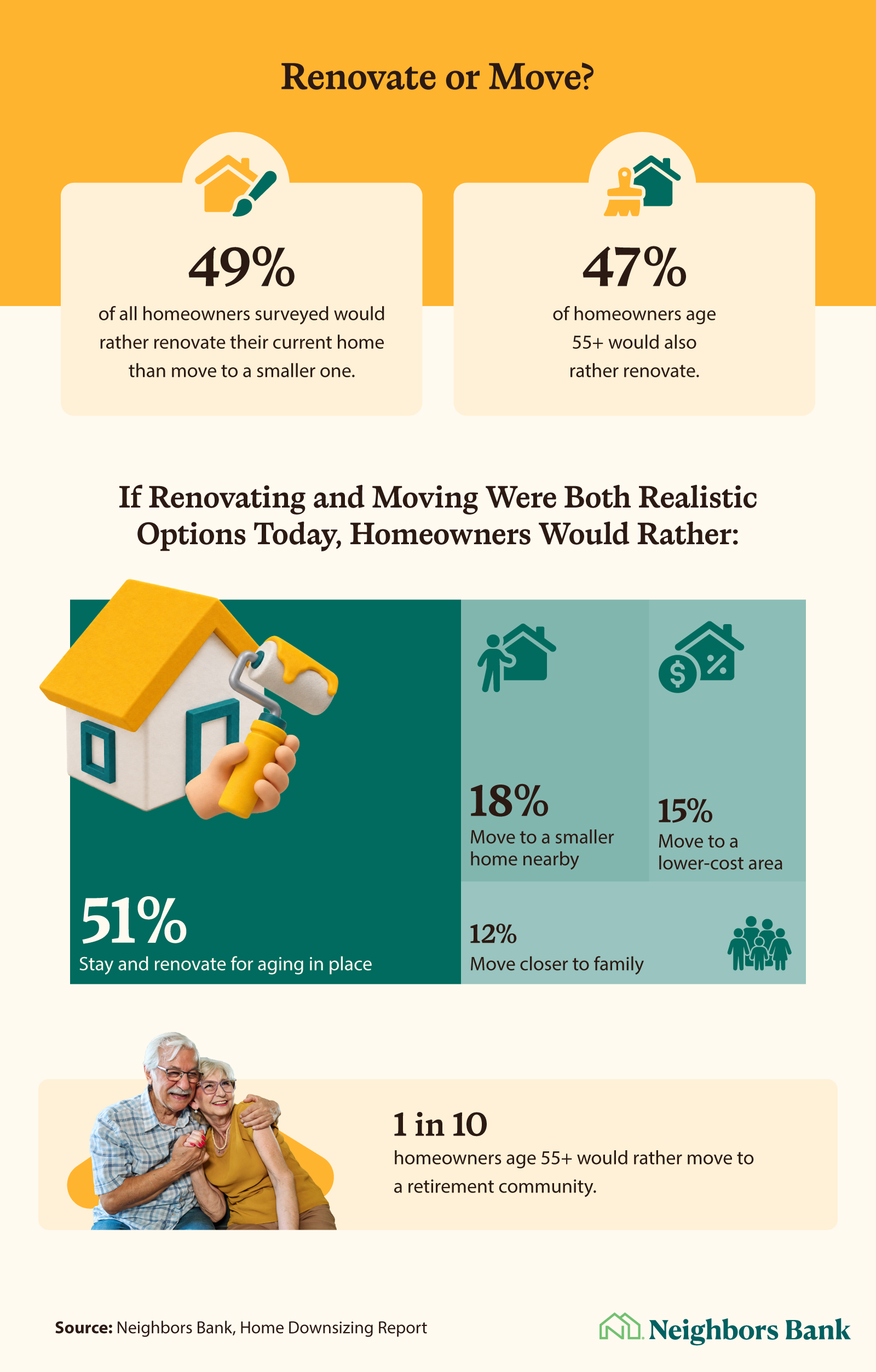
Across all homeowners who were surveyed, 49% said they'd rather stay in their current home and renovate than move to a smaller one. Among homeowners age 55 and older, 47% shared that preference.
When asked what they'd prefer if both renovating and moving were realistic options, 51% of homeowners chose to stay and renovate to age in place. Other choices included moving to a smaller home nearby (18%), moving to a lower-cost area (15%), or moving closer to family (12%). Among homeowners age 55 and older, one in 10 said they'd choose a retirement community.
Comparing the Costs of Renovating and Moving
Before deciding to renovate, homeowners should compare the cost of those improvements with the full cost of moving to a home that already meets their needs. That comparison should include upfront expenses and ongoing costs, such as monthly payments, property taxes, and maintenance.
Finding a Home That Fits the Next Chapter
For many older homeowners and first-time homebuyers, a smaller home holds the possibility of more manageable costs and less upkeep. For those buying a first home or considering a move, identifying their space needs and a comfortable budget provides a useful starting point.
A lender can help homeowners estimate payments on another home based on the proceeds from selling their current one and explore financing options that fit their budget. Neighbors Bank's home loan hub explains available financing options, eligibility requirements, and shows current interest rates to help homebuyers prepare for that conversation.
Methodology
Neighbors Bank surveyed 1,000 U.S. adults between September 3-5, 2026 (margin of error ±3.1 percentage points). Respondents were asked about their current housing situation and their home-buying intentions: 64% reported owning a home (with or without a mortgage) while 37% did not (renting, living with family, or other), and 63% said they were considering or actively trying to buy a home. Within the full sample, 34% were age 55 or older, and 22% were first-time homebuyers.
About Neighbors Bank
Neighbors Bank is a home loan lender focused on making homeownership more affordable and accessible. The bank combines digital mortgage tools with personalized guidance to help homebuyers understand their financing options and the homebuying process.
Fair Use Statement
The findings and graphics in this report are available for noncommercial reuse with attribution to Neighbors Bank and a link back to this page.